Minimum wage laws almost all economies in the world set up price floors for the labor force market.
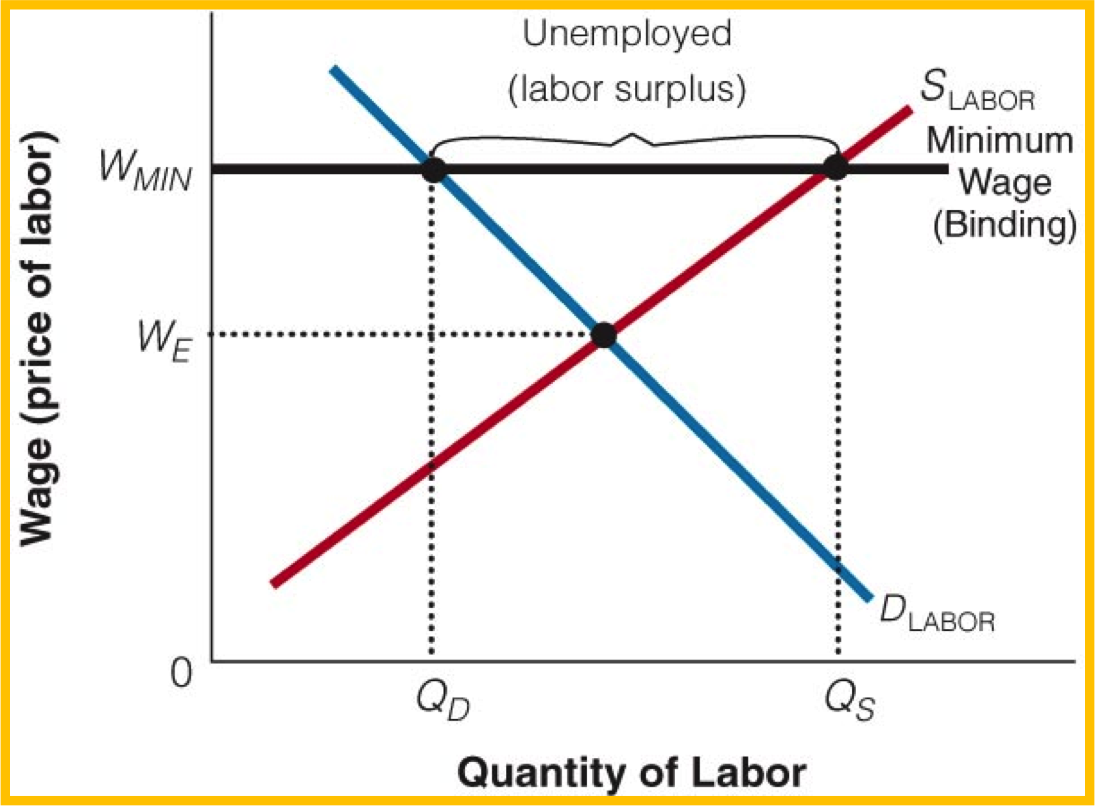
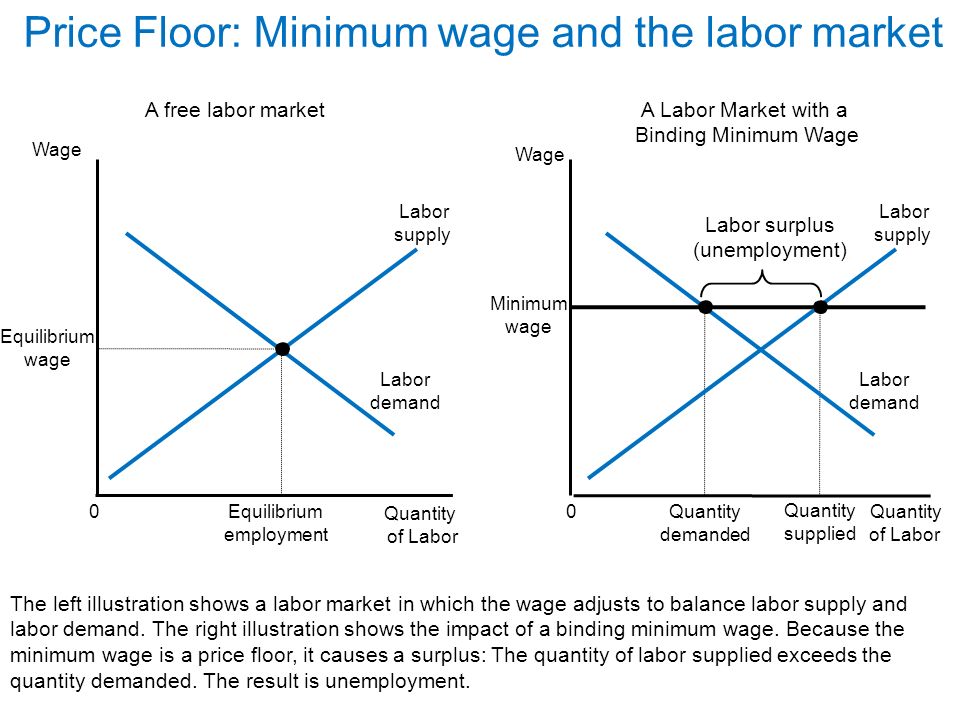
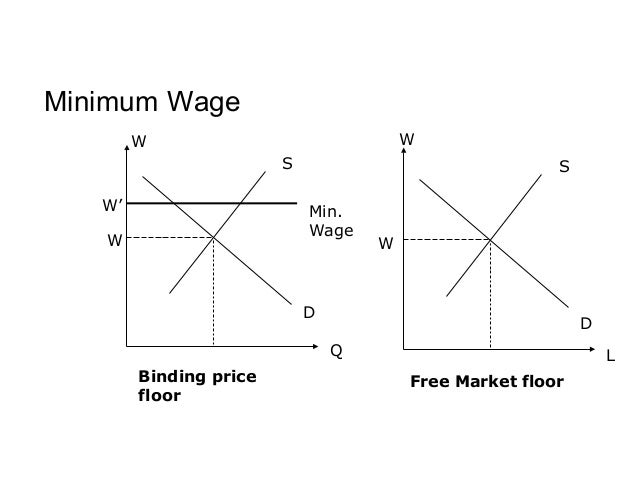
If the minimum wage is a binding price floor.
The number of workers who want to work will be greater than the number of jobs available.
It is usually a binding price floor in the market for unskilled labor and a non binding price floor in the market for skilled labor.
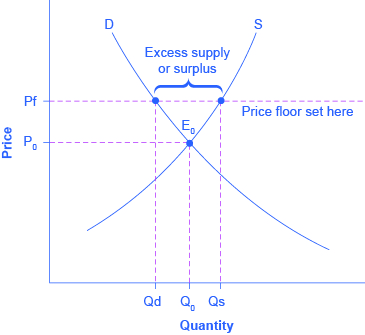
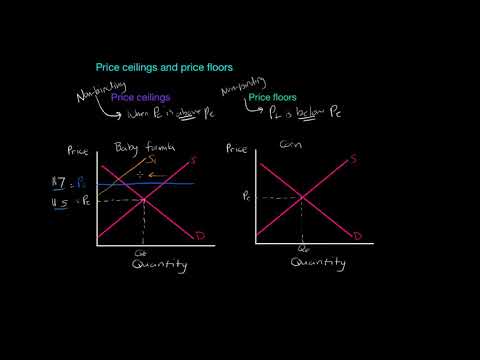
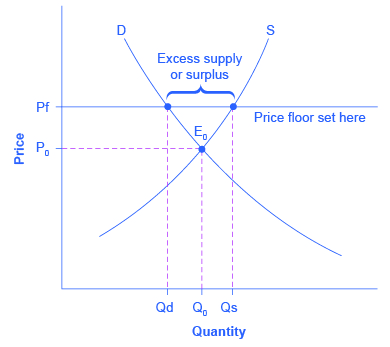
A price floor is a government or group imposed price control or limit on how low a price can be charged for a product good commodity or service.
A government set minimum wage is a price floor on the price of labour.
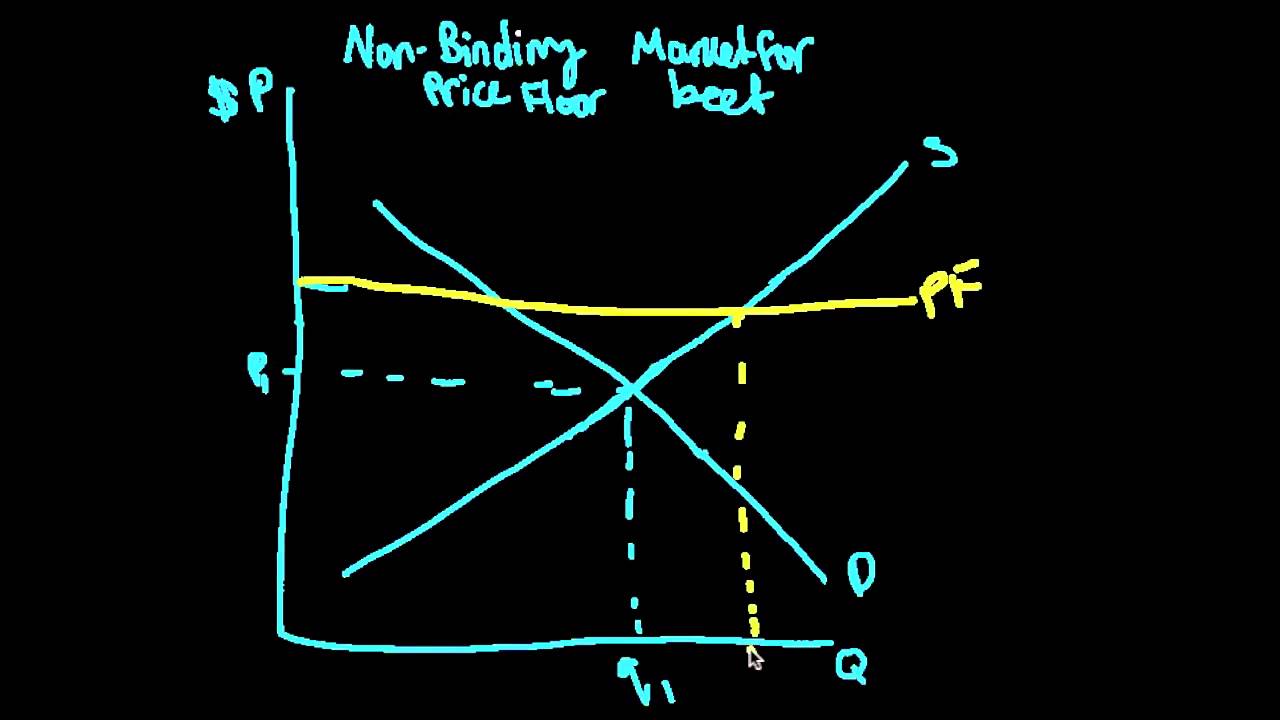
To be binding a price floor must be set at a price.
More specifically it is defined as an intervention to raise market prices if the government feels the price is too low.
The price floors are established through minimum wage laws which set a lower limit for wages.
A price floor or a minimum price is a regulatory tool used by the government.
In those states that impose such a minimum wage it is more likely that the minimum wage acts as a binding.
The federal minimum wage in 2016 was 7 25 per hour although some states and localities have a higher minimum wage.
If a country has the comparative advantage in producing wooden furniture then with free trade.
However if a company wants to pay an employee 6 00 per hour than the there is a problem because this amount is below the price floor.
The latter example would be a binding price floor while the former would not be binding.
In the case of minimum wage employees are the suppliers of labor the good while businesses become the consumers.
A price floor is the legal limit on how low a price may be set for a good.
If the minimum wage is a binding price floor then.
A number of states have a minimum wage that is higher than the federal minimum.
If a company wants to pay someone 10 00 per hour than there is no problem because this price is above the floor.
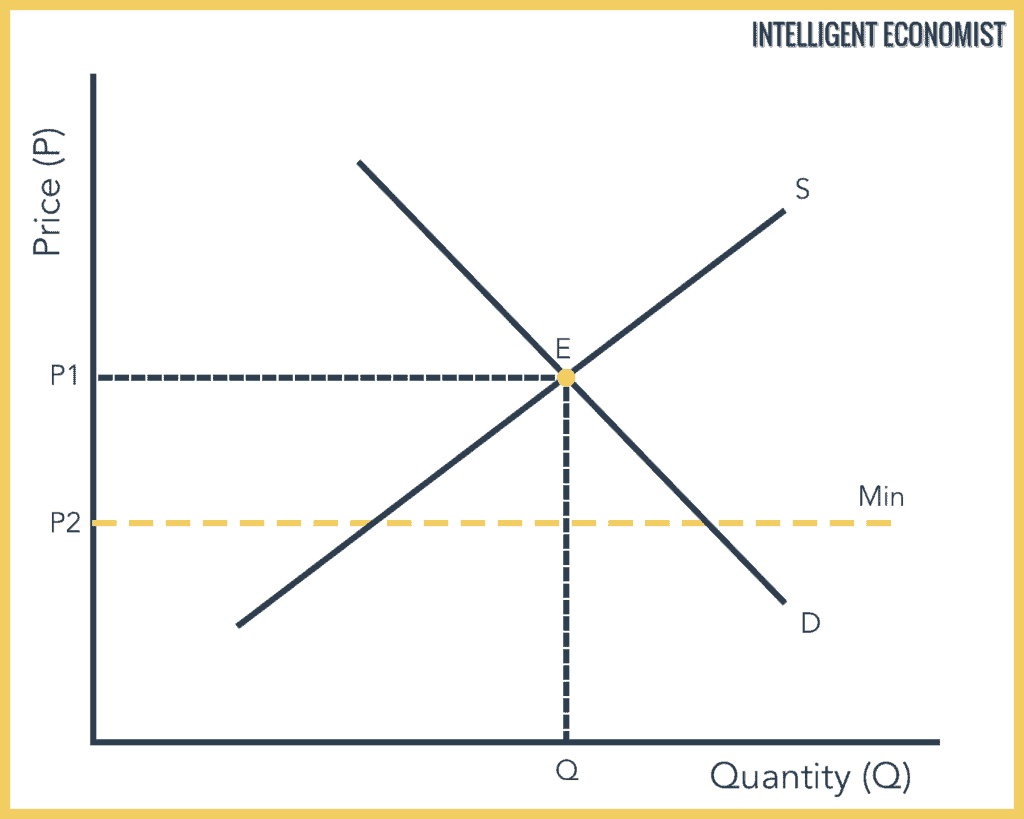
A price floor must be higher than the equilibrium price in order to be effective.
Perhaps the best known example of a price floor is the minimum wage which is based on the view that someone working full time should be able to afford a basic standard of living.
In this case since the new price is higher the producers benefit.
Minimum wage is an example of a government intervention in order to redistribute wealth through the use of a price floor.
Legislating a minimum wage is commonly seen as an effective way of giving raises to low wage workers.
Unfortunately it like any price floor creates a surplus.