Only surgery can repair it.
Inguinal hernia at floor of hesselbachs.
I m not sure it may help to go back and read get the facts an inguinal hernia won t go away on its own.
An inguinal hernia won t go away on its own.
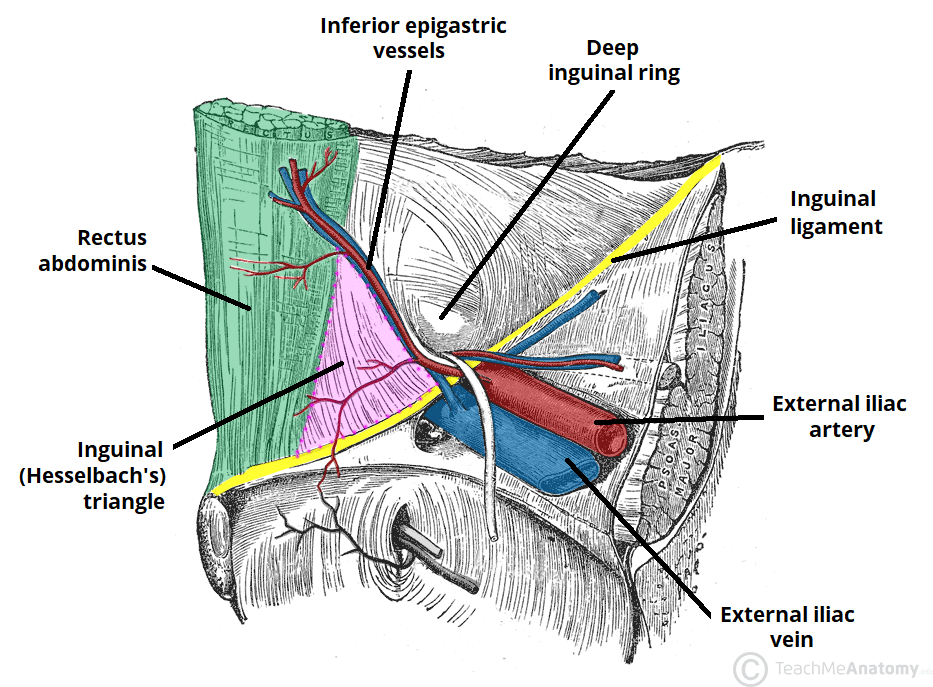
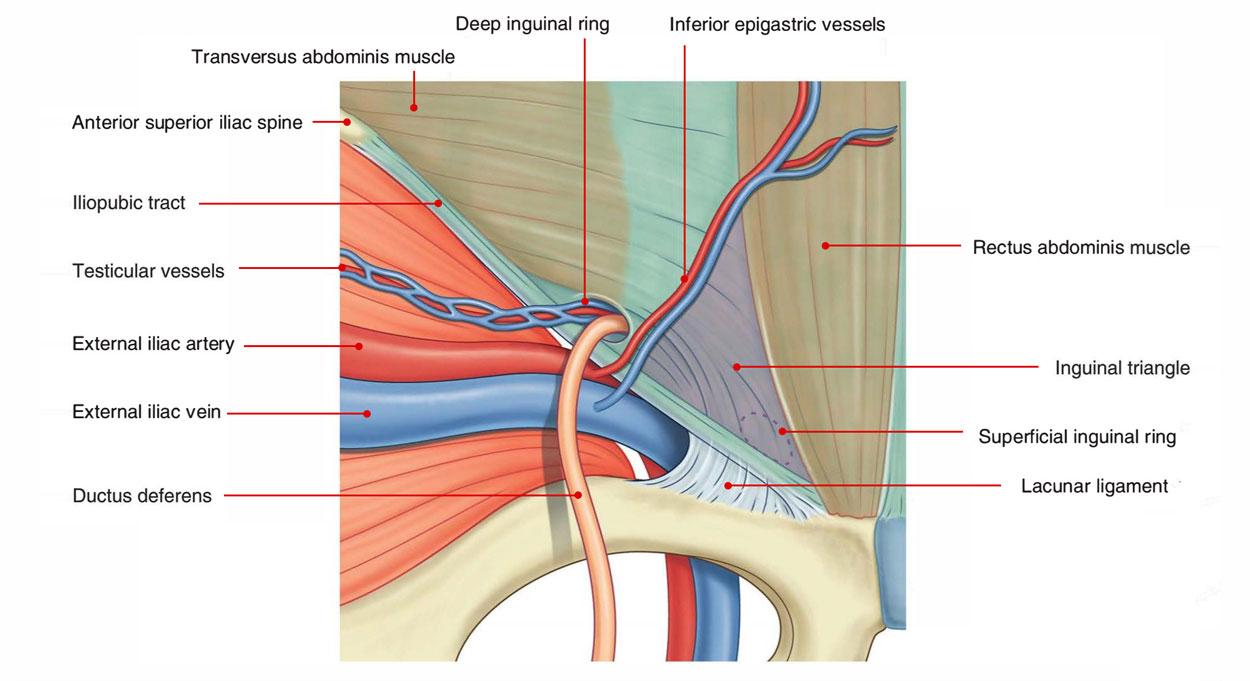
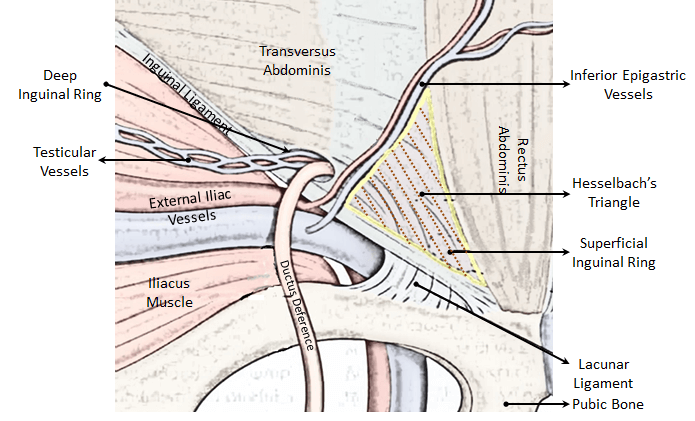
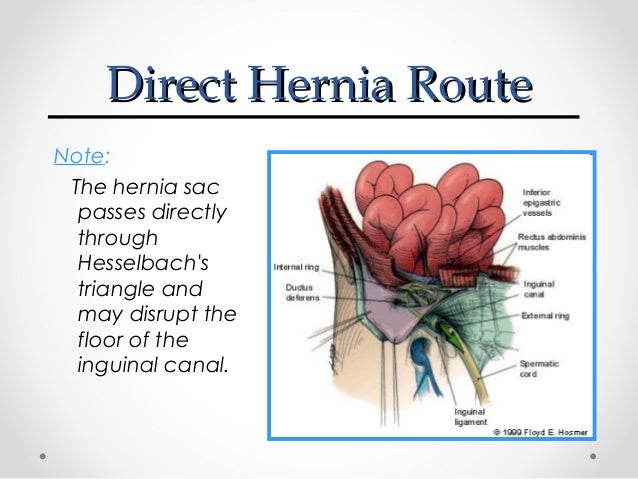
The hernia sac passes directly through hesselbach s triangle and may disrupt the floor of the inguinal canal.
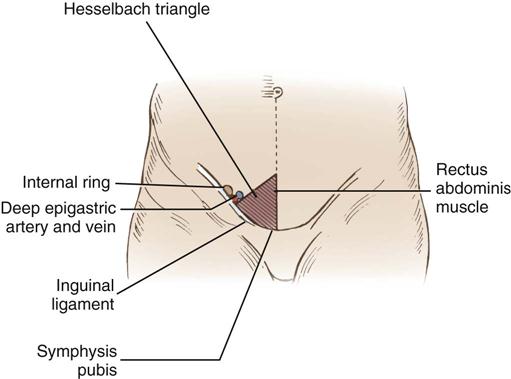
Lower 5 cm of the lateral border of the rectus abdominis muscle.
This may include pain or discomfort especially with coughing exercise or bowel movements.
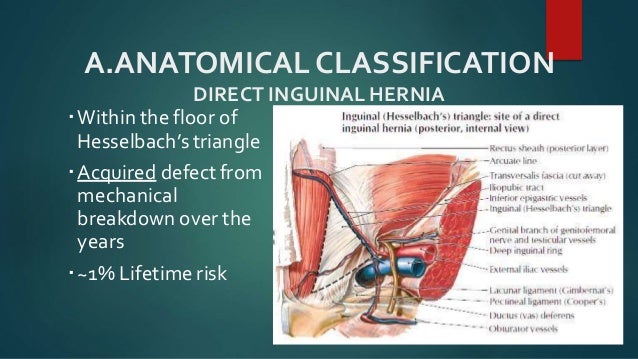
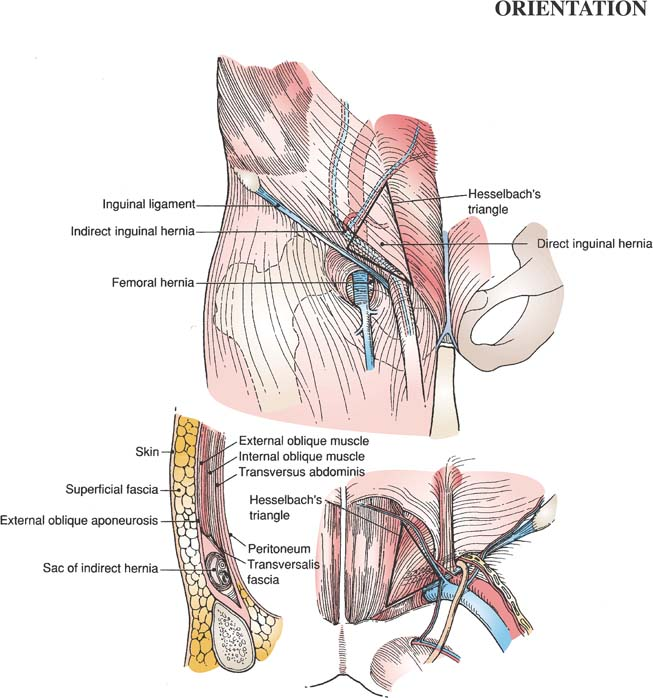
In a direct inguinal hernia bowel herniates through a weakness in the inguinal triangle and enters the inguinal canal.
There are 2 types of inguinal hernias.
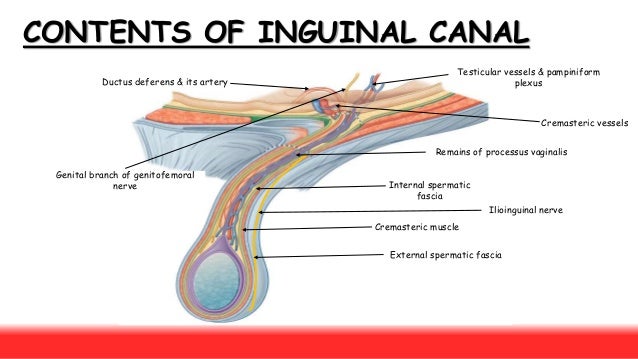
The inguinal canal is a passageway through the abdominal wall near the groin.
The medial umbilical ligament obliterated umbilical artery crosses the.
A groin inguinal hernia occurs when part of the intestine bulges through a weak spot in the abdominal wall at the inguinal canal.
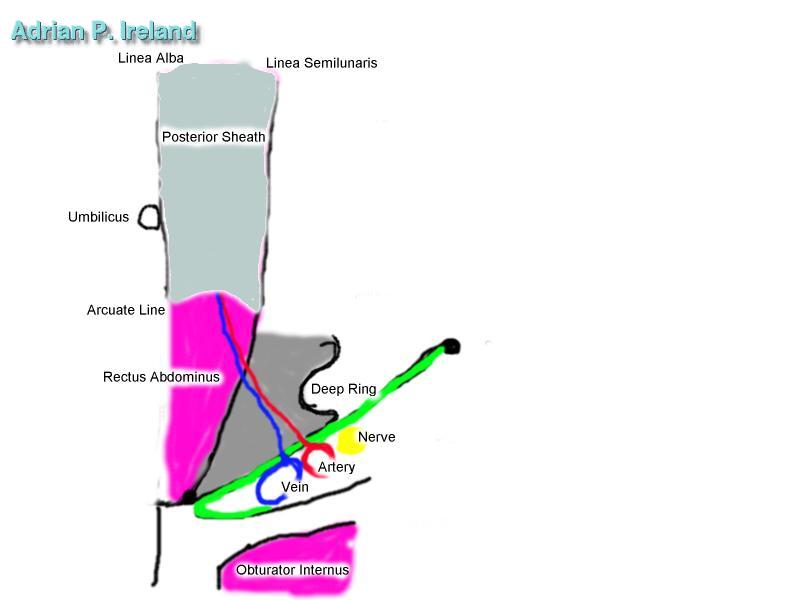
The boundaries of the inguinal triangle are as follows.
The inguinal triangle represents an area of potential weakness in the abdominal wall through which herniation can occur.
An inguinal hernia is a bulging of the contents of the abdomen through a weak area in the lower abdominal wall.
Inguinal hernias are up to 10 times more common in men than in women.
Only surgery can repair it.
A physical exam is usually all that s needed to diagnose an inguinal hernia.
These passages are called inguinal canals.
Only surgery can repair it.
An indirect hernia is generally believed to have a congenital component.
An inguinal hernia isn t necessarily dangerous.
Often it gets worse throughout the day and improves when lying down.
Inguinal hernia repair is a common surgical procedure.
An inguinal hernia is a protrusion of abdominal cavity contents through the inguinal canal.
This type of hernia is caused by a birth defect in the abdominal wall that is congenital present at birth.
It doesn t improve on its own however and can lead to life threatening complications.
Because standing and coughing can make a hernia more prominent you ll likely be asked to stand and cough or strain.
Your doctor will check for a bulge in the groin area.
Symptoms are present in about 66 of affected people.
Inguinal hernias can occur at either of two passages through the lower abdominal wall one on each side of the groin.
Inguinal hernias can also occur through two deeper passages in the groin.
An inguinal hernia occurs when the intestines or fat from the abdomen bulge through the lower abdominal wall into the inguinal or groin area.
Peritoneum covers the floor of the inguinal triangle extraperitoneal tissue and fascia transversalis.
About one in four men develop a hernia at some point in life.
Your doctor is likely to recommend surgery to fix an inguinal hernia that s painful or enlarging.
A bulging area may occur that becomes larger when bearing down.